News
Wind measurement update
October 2026
To assess the viability and feasibility of the proposed Tara Wind Farm, Vestas has been collecting wind and weather data using two types of monitoring equipment - meteorological (met) masts and trailer-mounted light detection and ranging (LiDAR) units.
Met masts are temporary structures that collect data including wind speed, wind direction and atmospheric conditions and will remain in place only for as long as they are required to collect Project data. LiDAR units are portable devices that use laser technology to measure wind speed, wind direction and other atmospheric conditions at different heights above the ground. This information helps Vestas understand the wind resource across the proposed Tara Wind Farm site and informs Project planning and assessment. Vestas currently has two met masts and two LiDAR trailers operating at the proposed site.
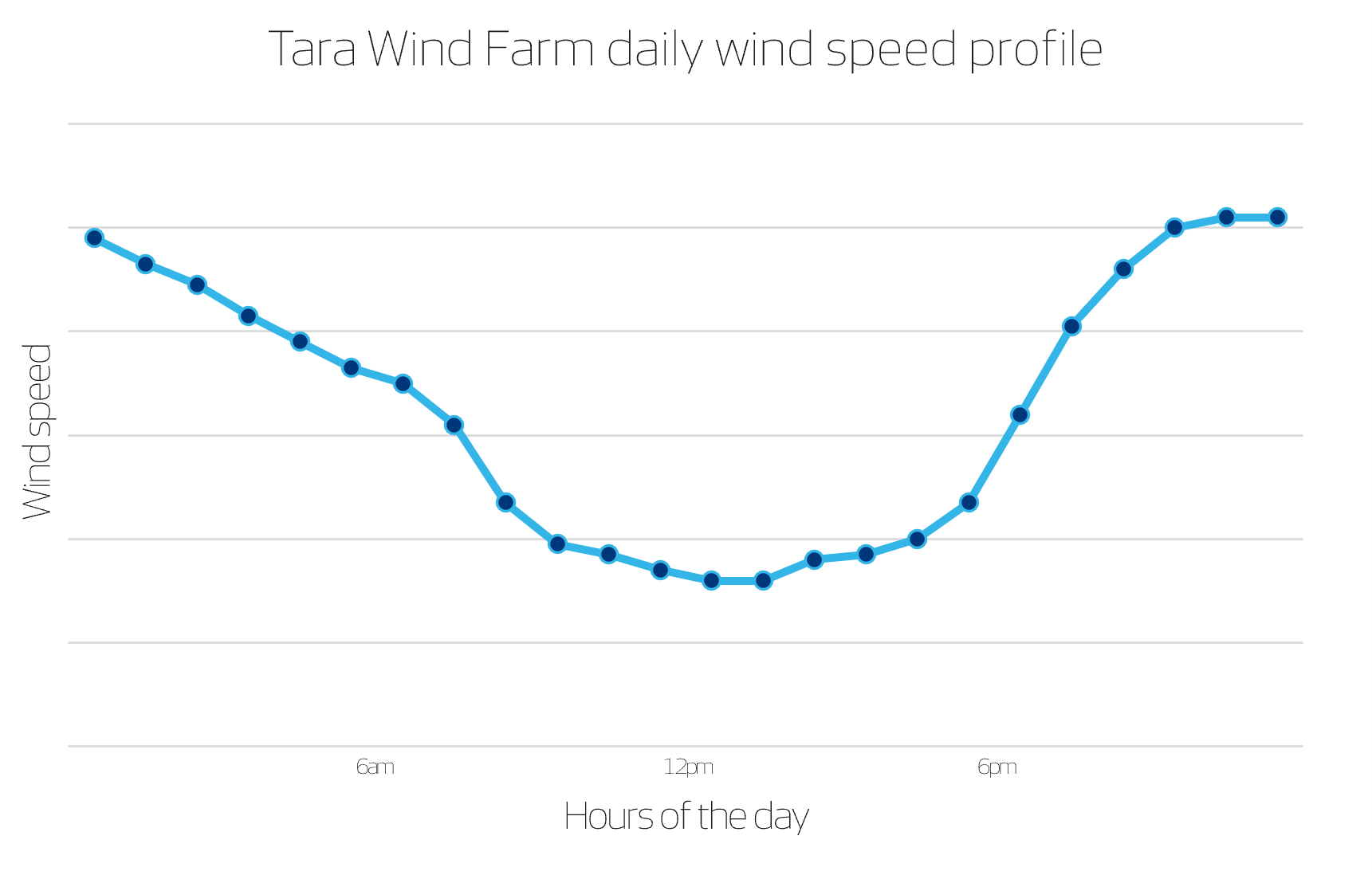
Data collected from the met masts and LiDAR units show favourable wind conditions throughout the day, with particularly strong wind speeds during the evening and overnight periods, when demand for electricity is high.
The two met masts will soon reach three years of wind monitoring, with the data collected to date confirming the site's strong wind resource. Based on advice from Vestas wind specialists, measurements from a single mast will be sufficient once this three-year monitoring period is complete. As a result, the mast located south west of the Bullock Head Road/Willis Road intersection is planned to be removed in early 2027, while the second mast, located to the north west of the Roaches Road/Bullock Head Road intersection, will remain on site.
Wind monitoring will continue across the proposed Project area using the remaining met mast and trailer-mounted LiDAR equipment, helping to further validate site conditions and inform the Project’s business case.